
Pink Eye
The girl who had to wear swim goggles in the shower
Yara was ten years old and she couldn’t let anything near her eyes. Wind, dust, especially water. Swimming goggles were non-negotiable anywhere near water. In pools of course but also in the shower or even just to wash her hair.
Even minor sensations, such as scratching or slight difficulty opening her eyes, would immediately trigger panic.
Her mother mentioned three significant events:
Two separate accounts of eye inflammation. The ones where you wake up in the morning with eyes stuck together by a crusty discharge.
And an event in the forest. Yara’s dad was chopping wood. A splinter flew into her eye and had to be removed by doctors.
By the time her mother brought Yara to me, even just the thought of wind or water near her face could trigger a panic response.
The fear had spread from actual danger to the mere possibility of danger to anything that moved through the air near her face.
She was basically on permanent alert.
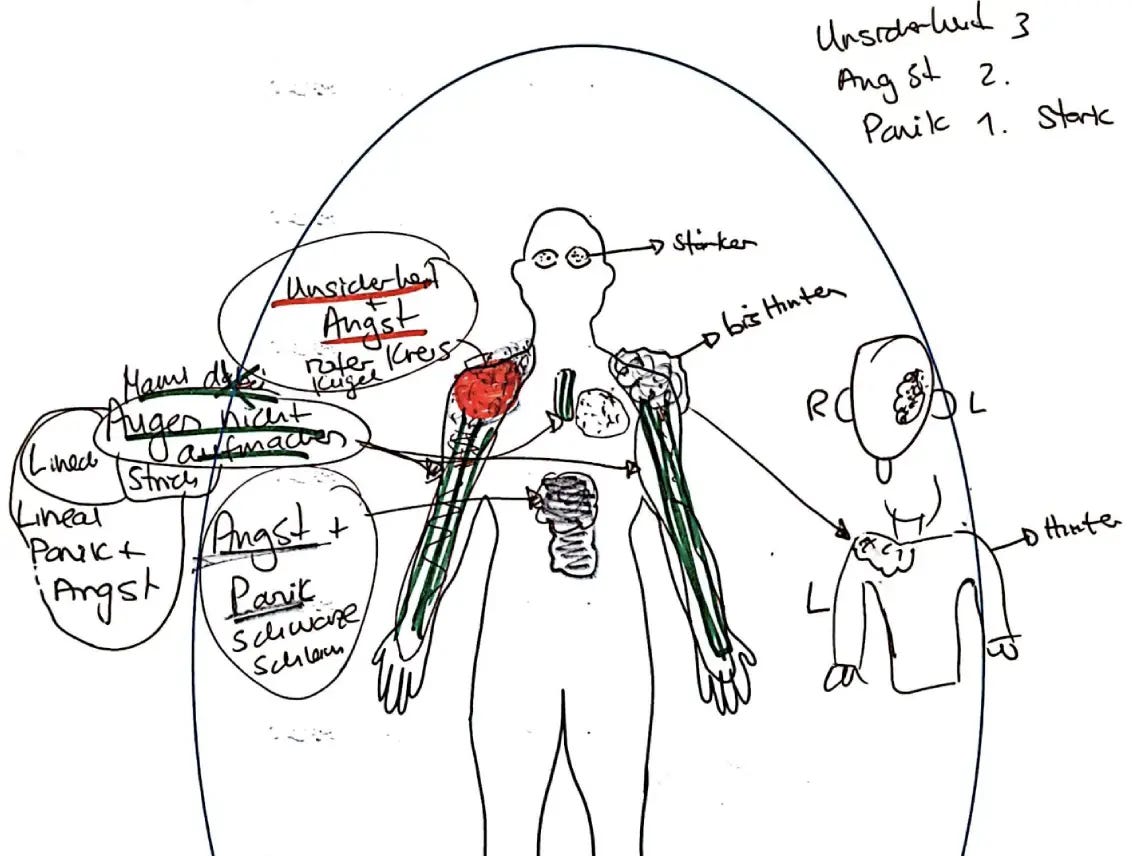
Eyes closed, I had Yara describe her inner world. It was full of animals. No people.
And there was a dark forest that triggered feelings of insecurity and fear.
She located that fear physically in different parts of her upper body. Black slime and long objects that looked like rulers, she described.
We began exploring where it had come from. One might think in this case that it’s obvious. Interestingly however, Yara said this fear was not hers. She was very clear about this.
I asked her to look at the people closest to her and tell me what she saw.
Her mother carried the same black slime. Her grandmother too. And also on the father’s side.
I only found out later from her mother there was a strong presence of fear within the family system. Obsessive anxious thoughts, hypochondriac tendencies, anxiety, and panic attacks were a theme for quite a few of the family members.
I explained it to Yara like this:
Feelings can live inside us quietly for years, dormant, waiting. Like a dog asleep in a corner. It isn’t causing problems. You barely know it’s there.
Then something wakes it up. And it barks.
In Yara’s case the pattern of developing fears was already there. Getting a splinter in her eye was the incident that woke up the sleeping dog.
I asked her a question.
“This panic you feel, do you understand that it didn’t start with you? That it was never really yours.”
She was quiet.
“Do you want to keep it?”
She shook her head.
“Then let’s give it back.”
We traced it to its origin: her great-grandfather on her father’s side. She spoke to him in her inner world. He hadn’t known he had passed it on to her. He apologized and she gave it back to him.
Before we finished the first session, I introduced Yara to her lizard.
This is what I call the primitive part of our brain. The part whose entire job is to protect us. It triggers our fight, flight and freeze response. It doesn’t think. It reacts. And once it decides something is dangerous, it stays on guard.
Yara’s lizard had decided anything near her eyes was a threat. It was doing its job perfectly. The problem was it had been given the wrong information.
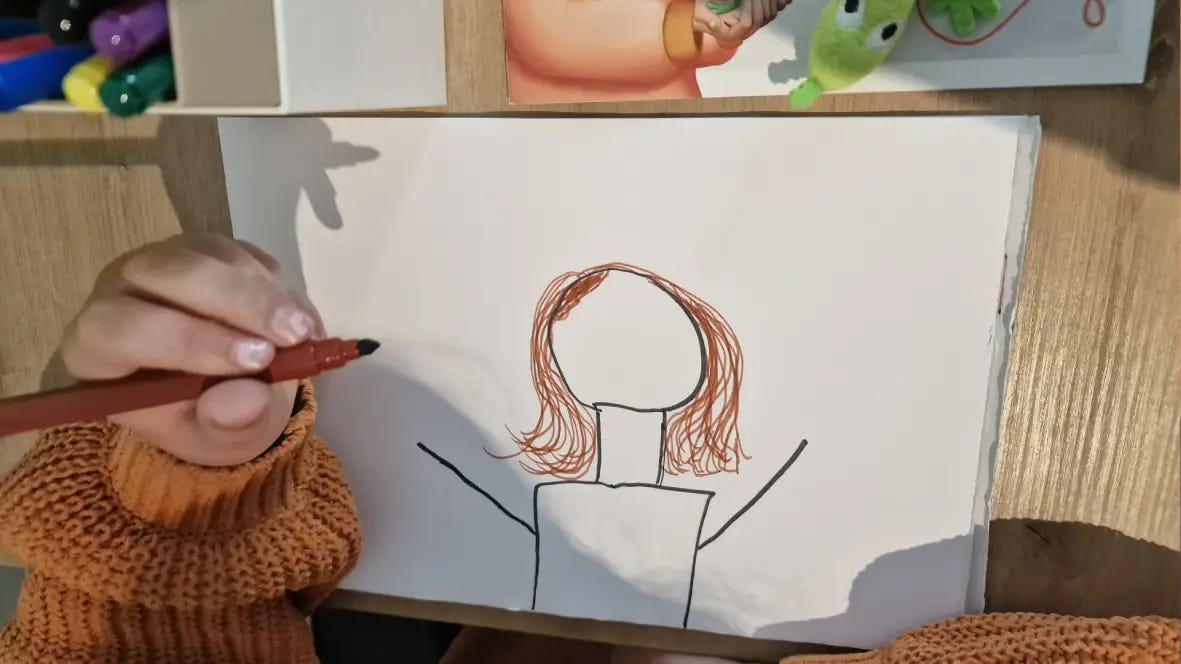
She chose green for hers. I placed a small plush lizard on her hand. We had a conversation with it. Told it what we had discovered and that this fear wasn’t Yara‘s.
Most importantly, that it no longer needed to sound the alarm.
Her lizard listened.
That concluded our first session.
That same week Yara stopped putting on goggles for showers and baths at home.
Very encouraging first signs of major progress.
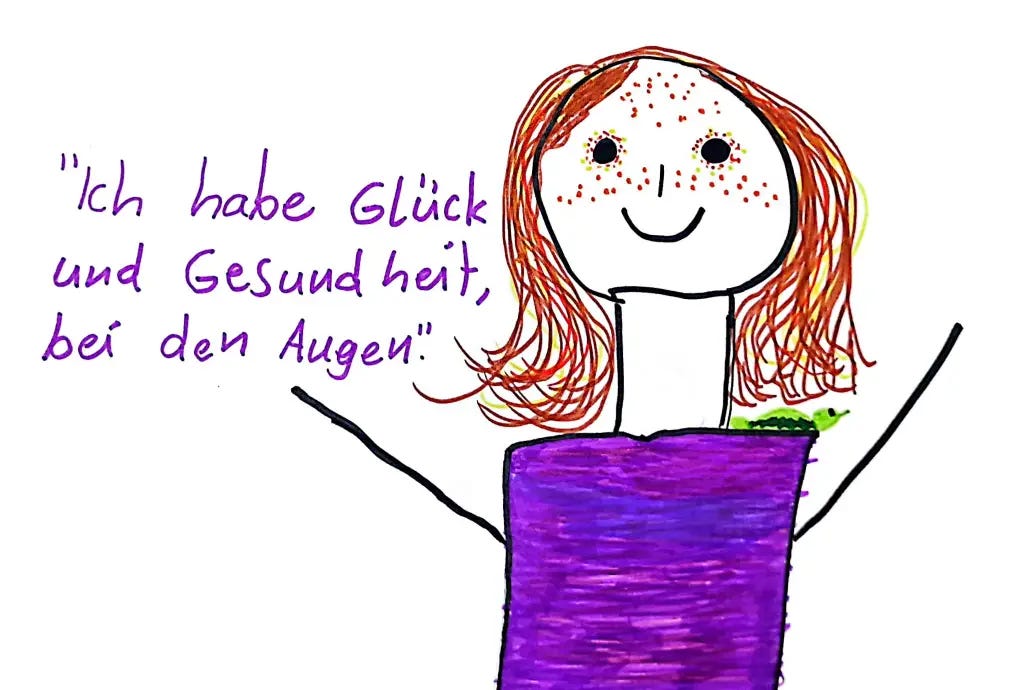
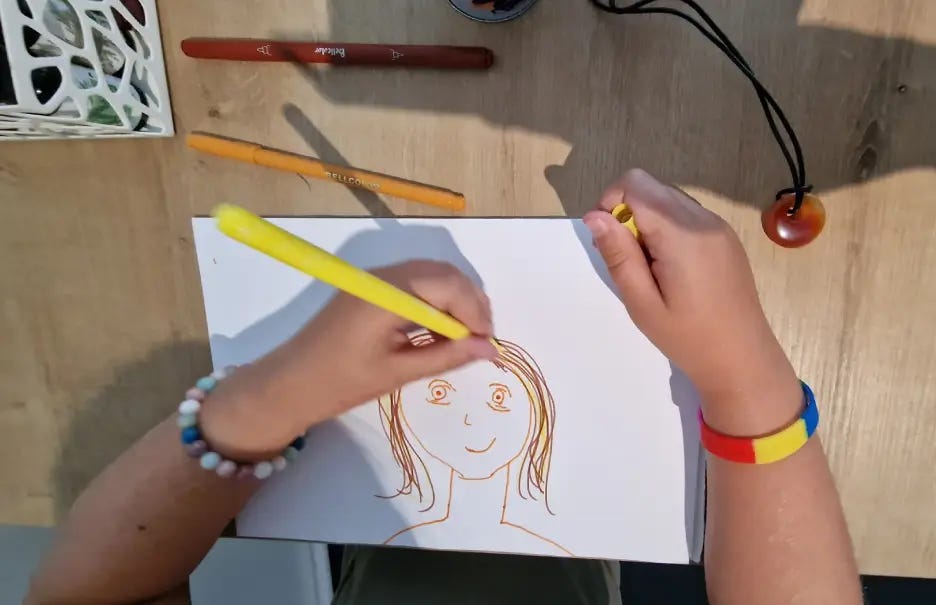
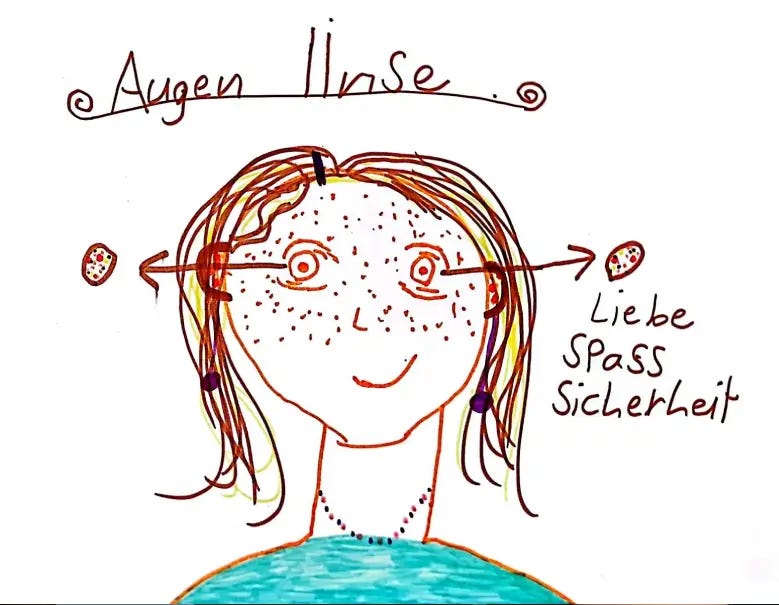
In the second session I had her try something new: contact lenses filled with feelings of safety, love and calm. She loved the idea. And said they had a faint rainbow shimmer.
With eyes closed she visualized placing the first lens into her right eye. Then her left.
No negative reaction.
Her lizard also stayed calm.
This was a key moment. She had something in her eye and yet there was no alarm.
We tested our way rigorously through all kinds of scenarios.
An eyelash in her eye. Take it out. Fine.
Shampoo in her eye during a shower. Rinse it out. Fine.
Ride a bike fast with lots of wind in her face. Fine.
She moved through each scene without fear, without panic, without the automatic response that had been running her life.
Here is what makes this intervention so powerful and worth understanding:
The lizard doesn’t need something to be real to react to it. A vivid enough signal is enough to trigger the alarm. Or in this case, to stand down.
When Yara imagined putting in those lenses, calmly and safely, her protection system got a new signal. Something in the eye, and no danger followed.
The lenses didn’t trick her rational mind. They reset her starting point.
Before, anything near her eye began from alarm. The lizard was already running by the time she could think about it.
The lenses didn’t trick her rational mind. They reset her starting point.
Before, anything near her eye began from alarm. The lizard was already running by the time she could think about it.
After, the baseline had shifted. Something in her eye was no longer automatically dangerous. It was just “something in her eye”.
After our two sessions together, the fear did not come back once. Not a hint.
Yara went to Spain shortly after for summer holiday. And played in the ocean without her goggles.
She never even really mentioned it again. It went from a dominating, restricting part of life to a non-topic.
A major breakthrough.
If this resonates with you:
Need help for your child? Sonya works with a limited number of families directly. [Tell us about your child →]
Know a child who needs this? Share this with their parent.
Interested in learning this? We train capable women in this craft. [Find out more →]
Know a podcast or publication that would benefit from this? [Let’s talk →]