
No Means Love
Why every "no" triggered a full explosion
Martin was ten years old. His life started with a separation from his mother right after birth. He spent two weeks with a foster family before finding a home with the parents who would raise him.
By the time he came to me, he had been in child psychology for over a year. The presenting issues were anger, provocation, and difficulty connecting with other children.
He was also being bullied at school. The other kids had learned which buttons to press.
The most painful button: jokes about his adoption.
His parents mentioned something else that stood out. Every time they told him no, he exploded. Full detonation. As if the word itself was an attack.
His lizard brain had been running that program ever since.
No equals rejection.
No equals abandonment.
Every boundary his parents set, every limit, every refusal landed in the same place as that very first no.
He wasn’t being defiant. His lizard was protecting him from what it believed no always meant.
Eyes closed I began asking him questions.
What’s easier for a parent, saying yes or saying no?
He thought about it. Yes, he said. Yes is easier.
I asked him why.
Because then there’s no argument.
And when parents say no?
There’s a fight. It takes energy. It causes stress.
So why would a parent bother saying no if yes is so much easier?
He was quiet for a moment.
I kept going. Think about sweets. Too many sweets damage your teeth. A parent who lets you eat sweets all day, are they working hard for you or taking the easy road?
Taking the easy road, he said.
And a parent who says no to to a third packet of sweets, who sits through the argument, who sticks to their no even when you’re furious at them?
“Because they love me.”
That was the moment. And Martin got there himself.
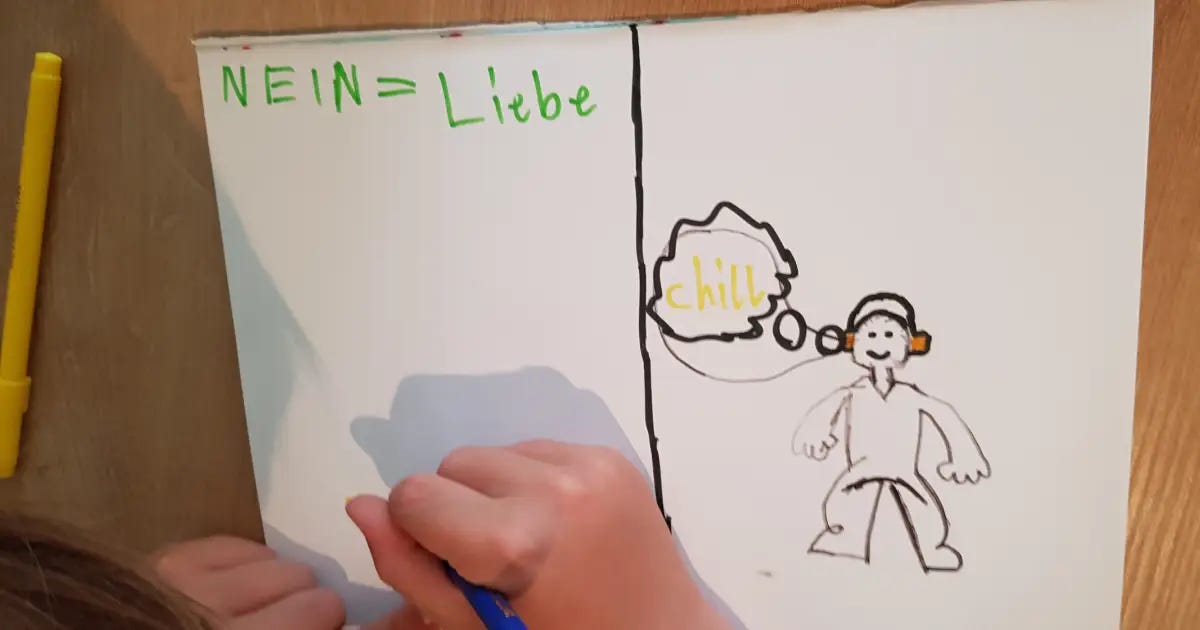
His strong reaction to no’s made complete sense. On the first day of Martin’s life, the one who was supposed to love him said no. Not in words. But in the most absolute way possible. By deciding not to keep him.
With that understanding in place, he turned to his lizard. And told it the same thing.
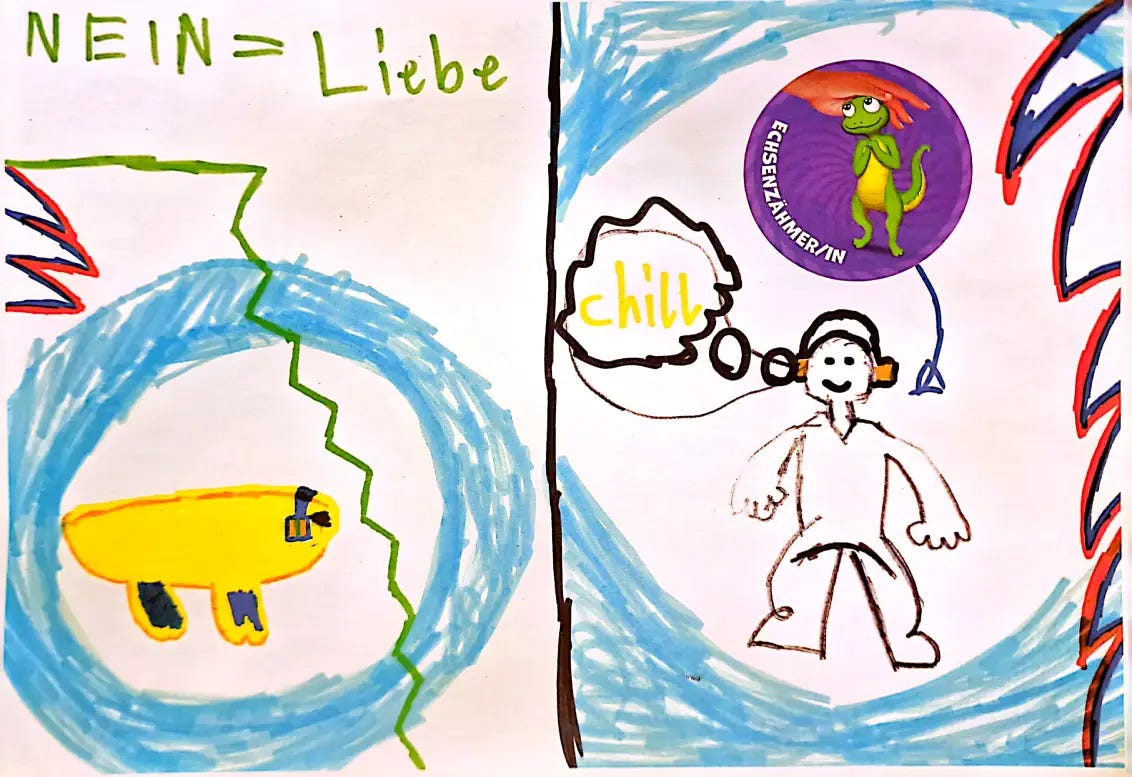
Two weeks later his mother reported that the boy who had made adoption jokes at his expense was now his friend.
Nobody had intervened in that relationship. Something had shifted in Martin. And that allowed for other dynamics to shift with it.
If this resonates with you:
Need help for your child? Sonya works with a limited number of families directly. [Tell us about your child →]
Know a child who needs this? Share this with their parent.
Interested in learning this? We train capable women in this craft. [Find out more →]
Know a podcast or publication that would benefit from this? [Let’s talk →]