
Lost Toy
The long forgotten, seemingly insignificant event that was at the root of separation anxiety
Emma (8) struggled with separation anxiety and a deep discomfort in unfamiliar situations. She would feel uneasy anytime the family wasn’t all together,
Eyes closed, she found herself in her inner world facing a herd of horses. Her favorite was black and white. She named it Lena. Lena stayed with her for the entire session.
In sessions I sometimes introduce a companion. An animal, a figure, whatever the child’s imagination comes up with. For some children, especially those afraid of being alone, having a companion for the journey makes a noticeable difference.
We went looking for the feelings driving her anxiety. She found several: sadness, nervousness, missing her family.
The fear of being alone stood out as the strongest. Emma described it as a red triangle in her stomach. She also said with certainty it had been with her since birth.
Children can’t consciously remember being born. But the body stores that experience as a feeling. A difficult birth with chaos, urgency, medical intervention can land as threat. A sense that the world is unsafe.
Together we reframed the situation. The chaos wasn’t a threat. It was a room full of people fighting for her. Every urgent voice, every intervention, every rushed decision was someone making sure she arrived safely.
We discovered a second significant event. She was three years old and lost her favorite plush toy.
Again we reframed the experience. As the eight-year-old today she visualized herself going back and comforting herself at three years old.
After the session, her surprised mother confirmed both events.
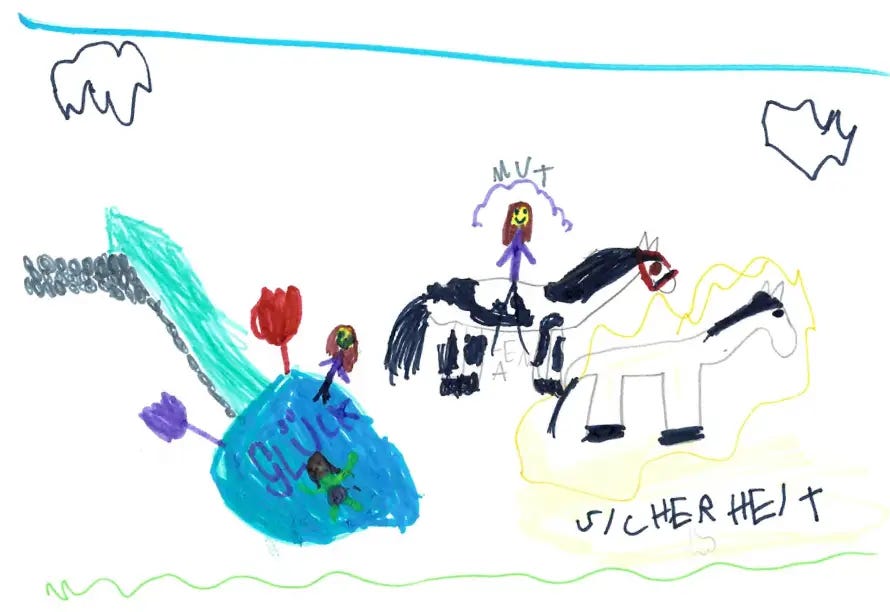
The moments around birth had been hectic and stressful. Her daughter experienced oxygen deprivation and birth had to be induced by the doctors.
Long forgotten was their family holiday where they forgot her teddy at a rest area along the highway. Drama and tears, but no idea this could have such a deep effect.
A seemingly small loss at three years old is not small to that three-year-old. It can land as abandonment or lack of safety and security.
I’ve seen this more times than I can count. Children carry feelings they can’t describe in words. And experiences they have no conscious, detailed memory of. But we can work this out with shapes, colors, sensations in specific parts of their body.
We can’t change what happened, but we can change how a memory lives in the body.
If this resonates with you:
Need help for your child? Sonya works with a limited number of families directly. [Tell us about your child →]
Know a child who needs this? Share this with their parent.
Interested in learning this? We train capable women in this craft. [Find out more →]
Know a podcast or publication that would benefit from this? [Let’s talk →]