
Good Fuel
Luca was seven and hated eating. His Lamborghini changed that.
Every evening the same scene: endless chewing, sitting at an almost full plate long after everyone else had finished their meal.
I started our session by asking him about his interests.
Fast cars. And soccer. He went on about how we wanted to become a professional player one day.
Perfect. I had the necessary point of entry.
So, we talked about engines. About horsepower.
About good fuel and bad fuel. And about what happens to a high-performance engine when it doesn’t get good fuel.
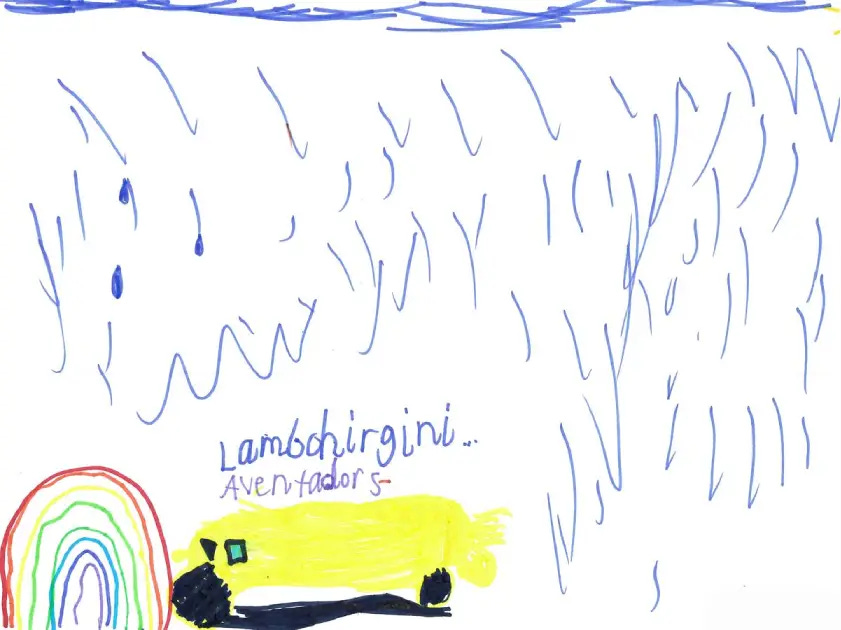
With eyes closed, he visualised his favourite car.
A Lamborghini.
An Aventador S.
Yellow.
Details matter.
“Does it need a lot of fuel or just a little?”
“A lot.”
“Can it go fast if you give it bad fuel?”
“No”.
He played out scenes in his mind—how the engine would eventually start smoking and break down if it was given the wrong fuel.
I then asked him: “So now that you know what fast cars need… what is your fuel? What gives you energy?”
He thought for a moment and said: “Food.”
“Exactly. Our fuel is food.”
Then we shifted to his dream of becoming a professional football player.
“So if you want to be a strong, fast footballer—what does that mean for you?”
He figured it out before I even finished the question.
“That I need to eat more good food.”
You could see the shift in his perspective written all over his face.
If he wanted to be fast—if he wanted to become a professional footballer—then just like a high-performance car, he needed the right fuel to reach his goal.
I didn’t need to convince him.
The right form of motivation simply needed to be activated—so he could take ownership of his eating habits and strengthen his performance.
This is something I do deliberately in almost every session. Before we begin, I find out what the child loves. What they’re obsessed with. What makes their eyes light up.
This opens doors to a child’s inner world that would normally remain closed.
Open doors lead to rapid shifts in perspective—and ultimately to positive change.
Using metaphors connected to what they already know and understand is more powerful than I can describe.
Every child has a framework for understanding the world, developed from the things they care about most. For Luca this was engines, fuel, and soccer.
When a child reaches their own conclusion, it sticks in a way that no amount of parental persuasion ever could.
If this resonates with you:
Need help for your child? Sonya works with a limited number of families directly. [Tell us about your child →]
Know a child who needs this? Share this with their parent.
Interested in learning this? We train capable women in this craft. [Find out more →]
Know a podcast or publication that would benefit from this? [Let’s talk →]